
News
Apple leads global smartphone profits for Q2 2018
More money for the company


Apple didn’t manage to sell the most number of smartphones, but they still earned a lot more than their competitors. According to the latest data from Counterpoint Research, Apple had the biggest share of industry profits during the second quarter of the year.
The report states that Apple earned 62 percent of the second-quarter profits related to smartphone sales. Samsung, which is the top-selling smartphone vendor, is responsible for just 17 percent of smartphone profits in the quarter. Basically, Apple’s profits amounted to more than 3.6 times than Samsung’s.
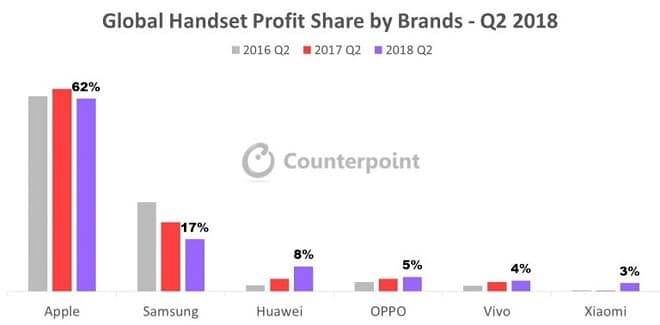
Samsung’s profits continue to decline over the last three years, but Chinese tech giants enjoy the opposite. Huawei placed third accounting for eight percent of the smartphone profits, OPPO has five percent, Vivo gets four percent, and Xiaomi with three percent. The report noted that the Chinese manufacturers produced more premium handsets during the second quarter which allowed them to score US$ 2 billion in profits for the first time.
As for deeper insights, the iPhone brought Apple US$ 6 billion in profits on US$ 30 billion in sales during the second quarter. Samsung’s smartphone profits, on the other hand, declined 21 percent. Shipments of the Galaxy S9 series is down by 24 percent compared to shipments of the Galaxy S8 series during the same quarter last year.
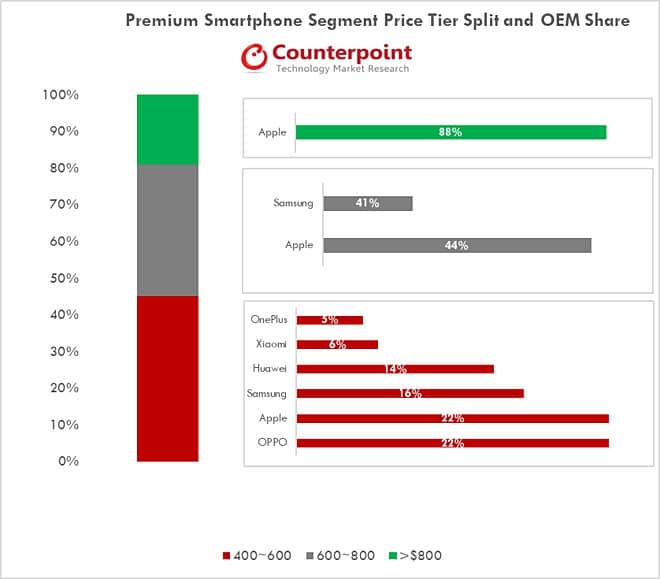
Counterpoint also showed Apple’s dominance in the high-end market. During the second quarter, the iPhone was responsible for 88 percent of the revenue generated by sales of smartphones above US$ 800. Apple, with 41 percent, and Samsung, with 44 percent, battled for phones priced between US$ 600 to 800.
The midrange US$ 400 to 600 price of smartphones was led by Apple and OPPO, each with 22 percent of the revenue generated by sales in that segment. Samsung and Huawei were next with 16 and 14 percent, respectively. Xiaomi follows behind with six percent and OnePlus with five percent.
Via: AppleInsider
SEE ALSO: New report confirms Huawei’s dominance over Apple in smartphones




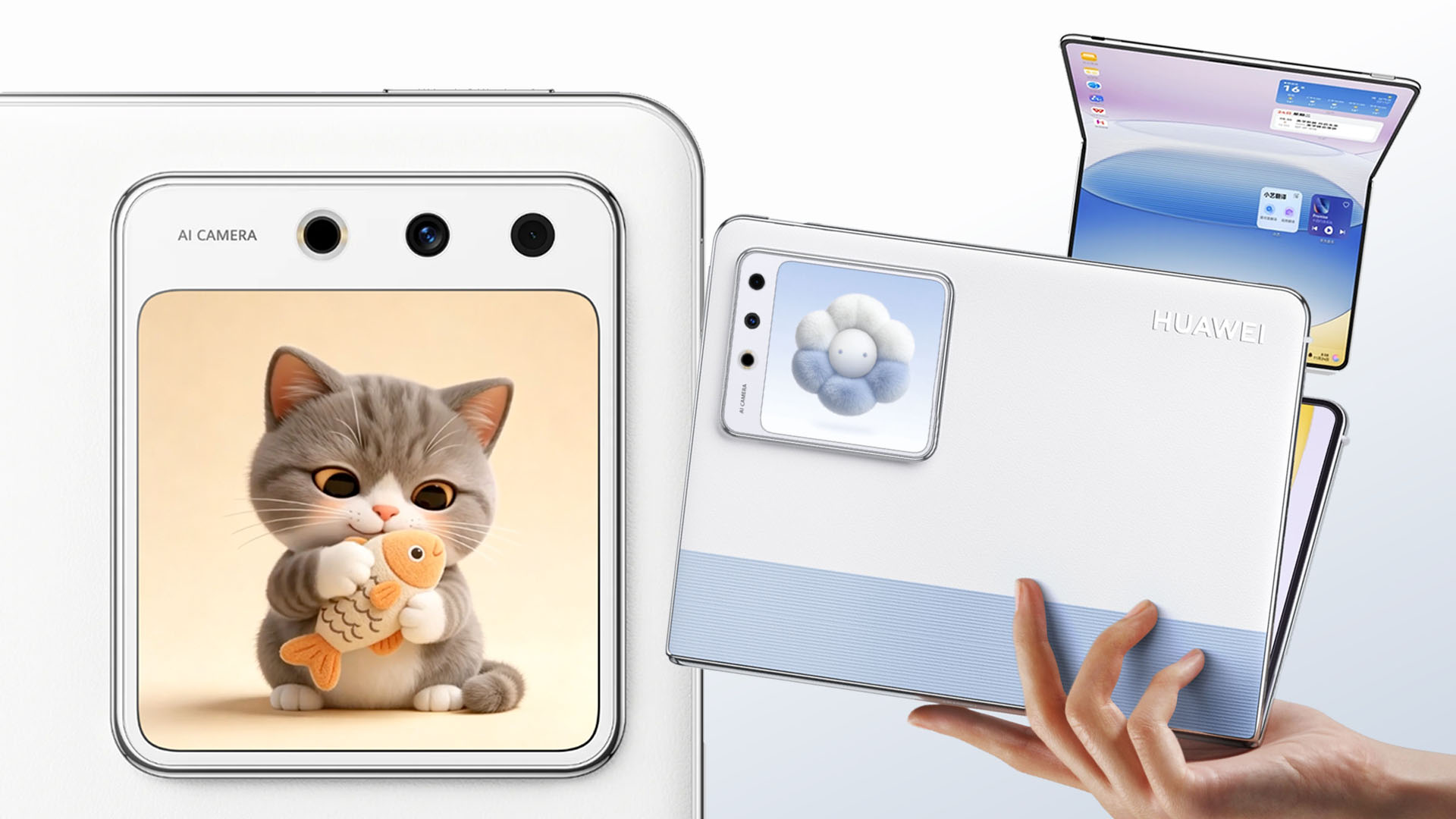
HUAWEI introduced the MateBook Fold as their first foldable laptop slash tablet hybrid last May 2025. After 1.5 years, they’re back with the HUAWEI MateBook Fold S.
Keen for that dual screen
Compared to the original MateBook Fold, the MateBook Fold S is equipped with a slightly smaller screen.
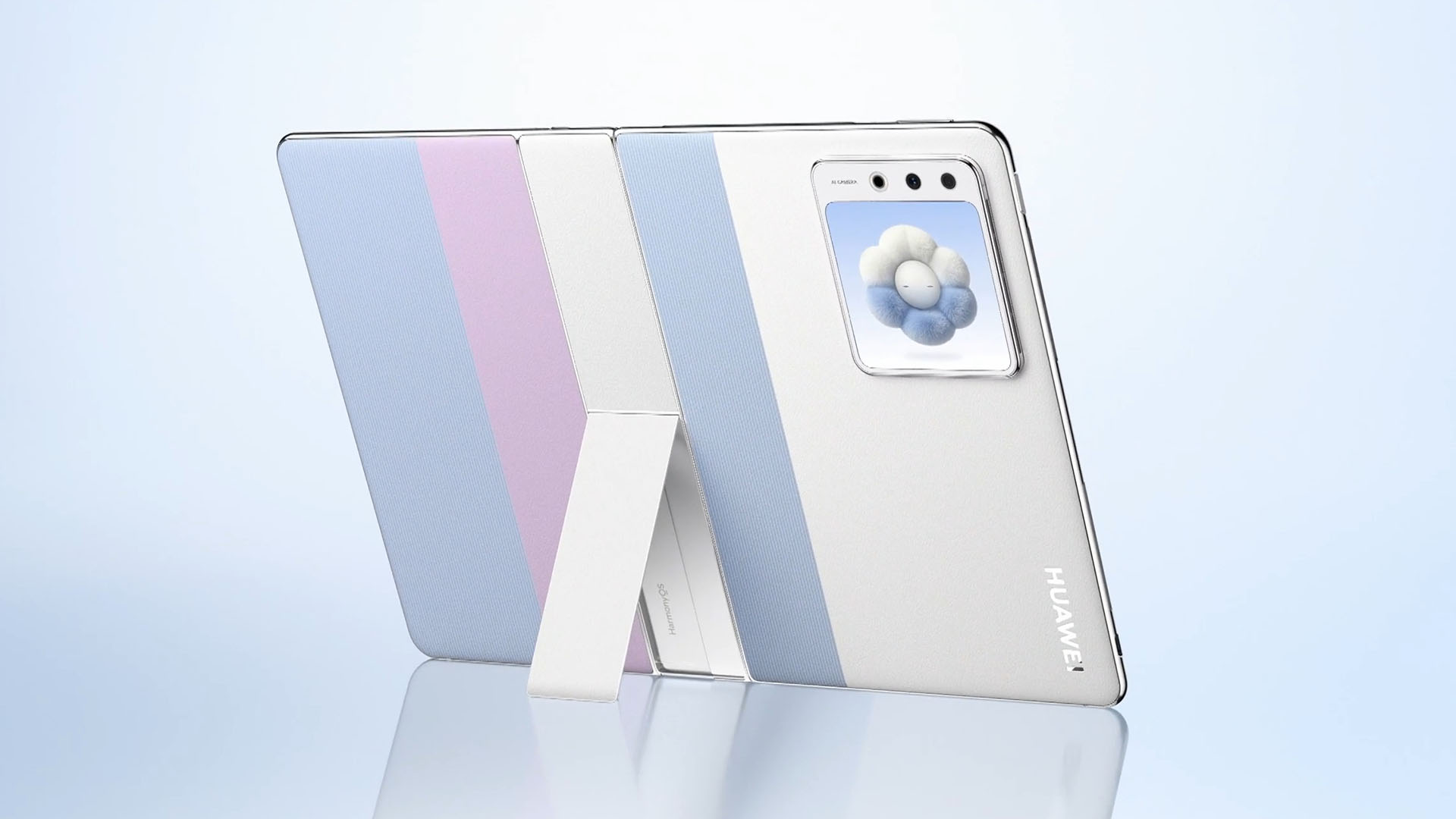
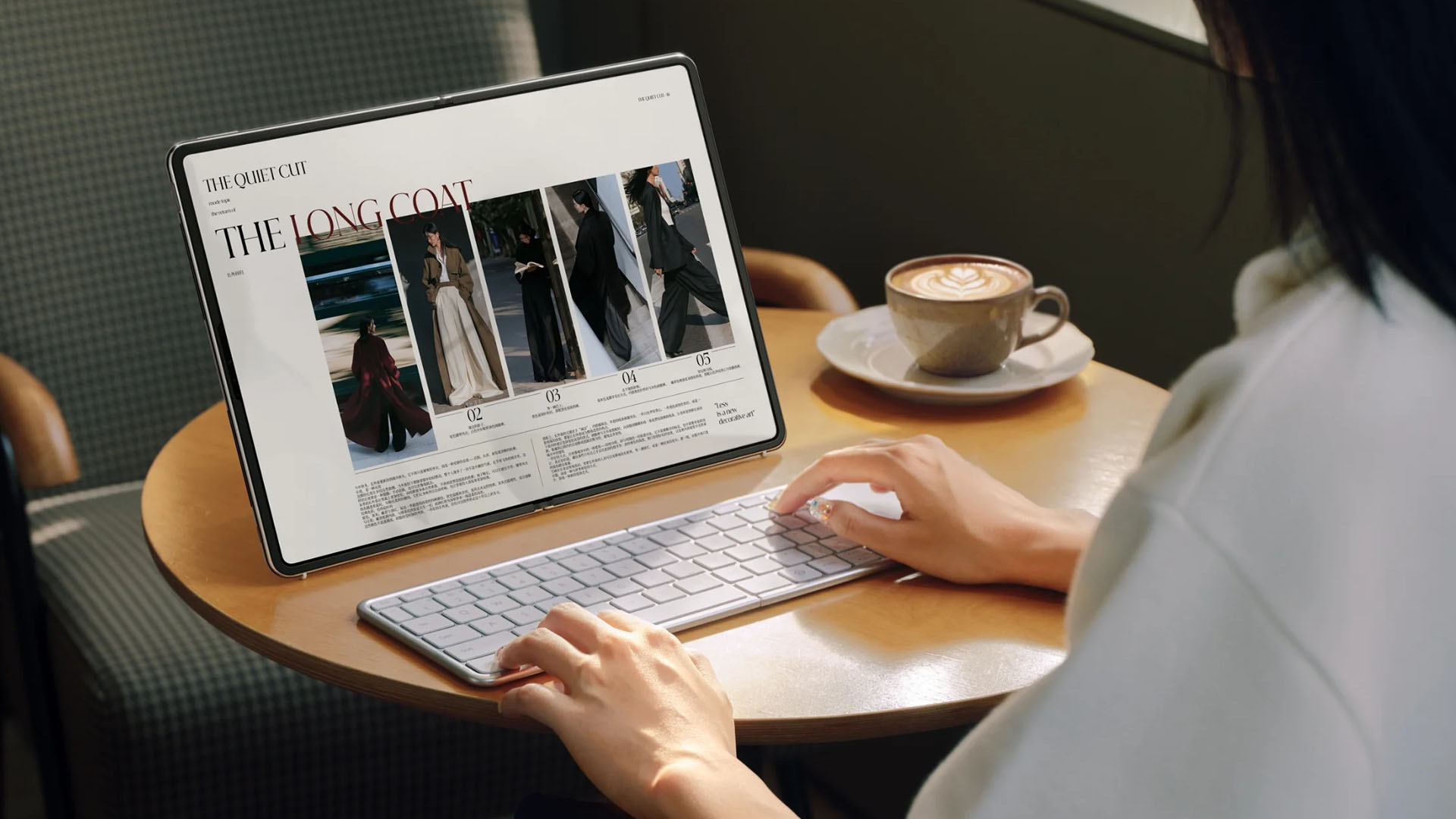
Unfolding it gives users an expansive 14.7-inch 3:2 flexible OLED display (versus 18 inches). When folded in half, it still has a manageable workspace of 10.2-inch 4:3 screen size (in contrast to 13 inches). The other half is app-dependent but it also serves as a virtual keyboard and trackpad combo in one (or just choose one, whichever you like).
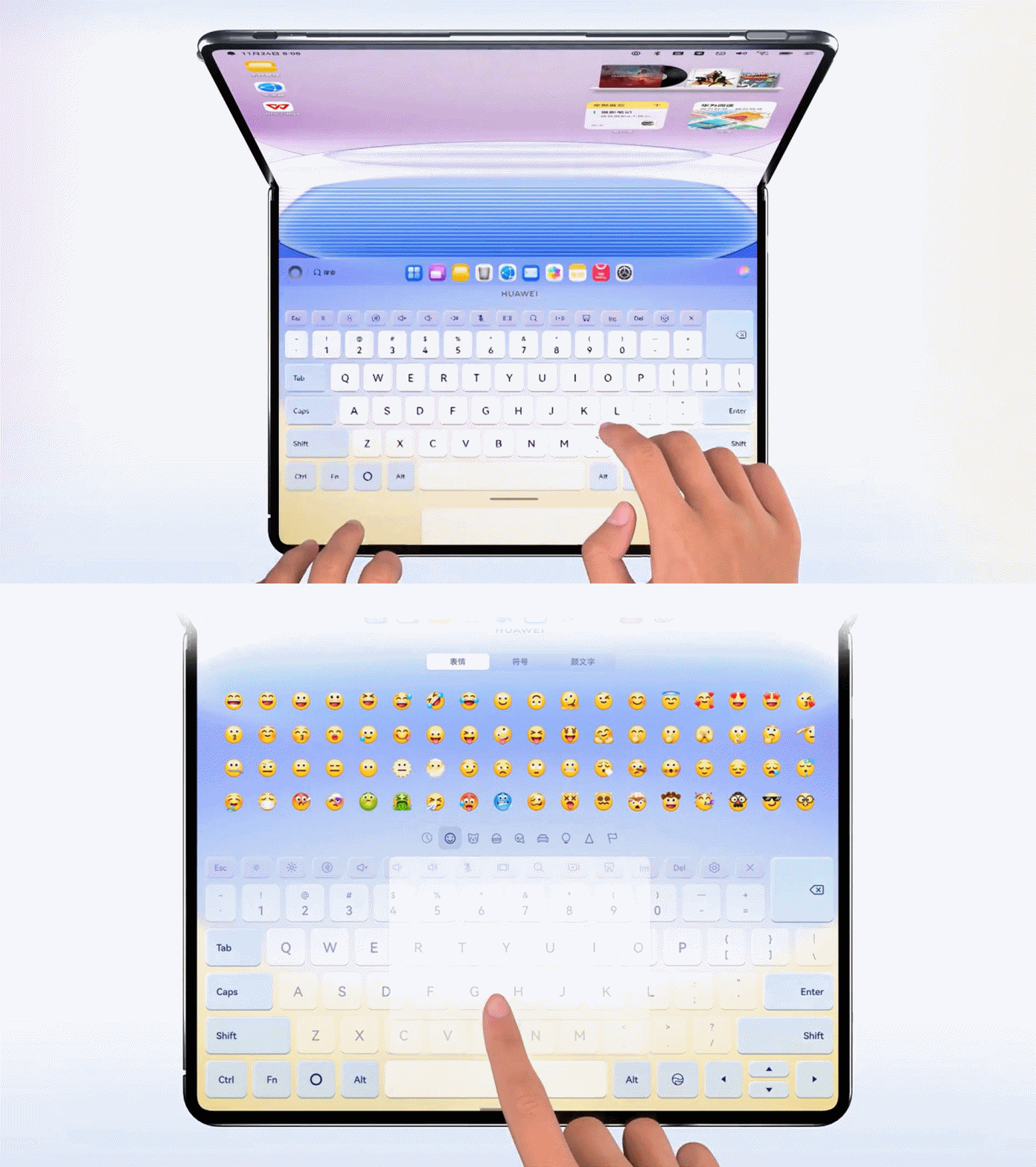
GIF by Vincenz Lee | GadgetMatch
For specifics, it’s an LTPO 2.0 display capable of switching from 120Hz refresh rate all the way down to 1Hz. This screen can also reach up to 1600 nits of peak brightness with a 2,000,000:1 contrast ratio plus DCI-P3 and HDR Vivid support.
On top of that is where the 12MP front camera plus 1MP IR face recognition sensor both sit.
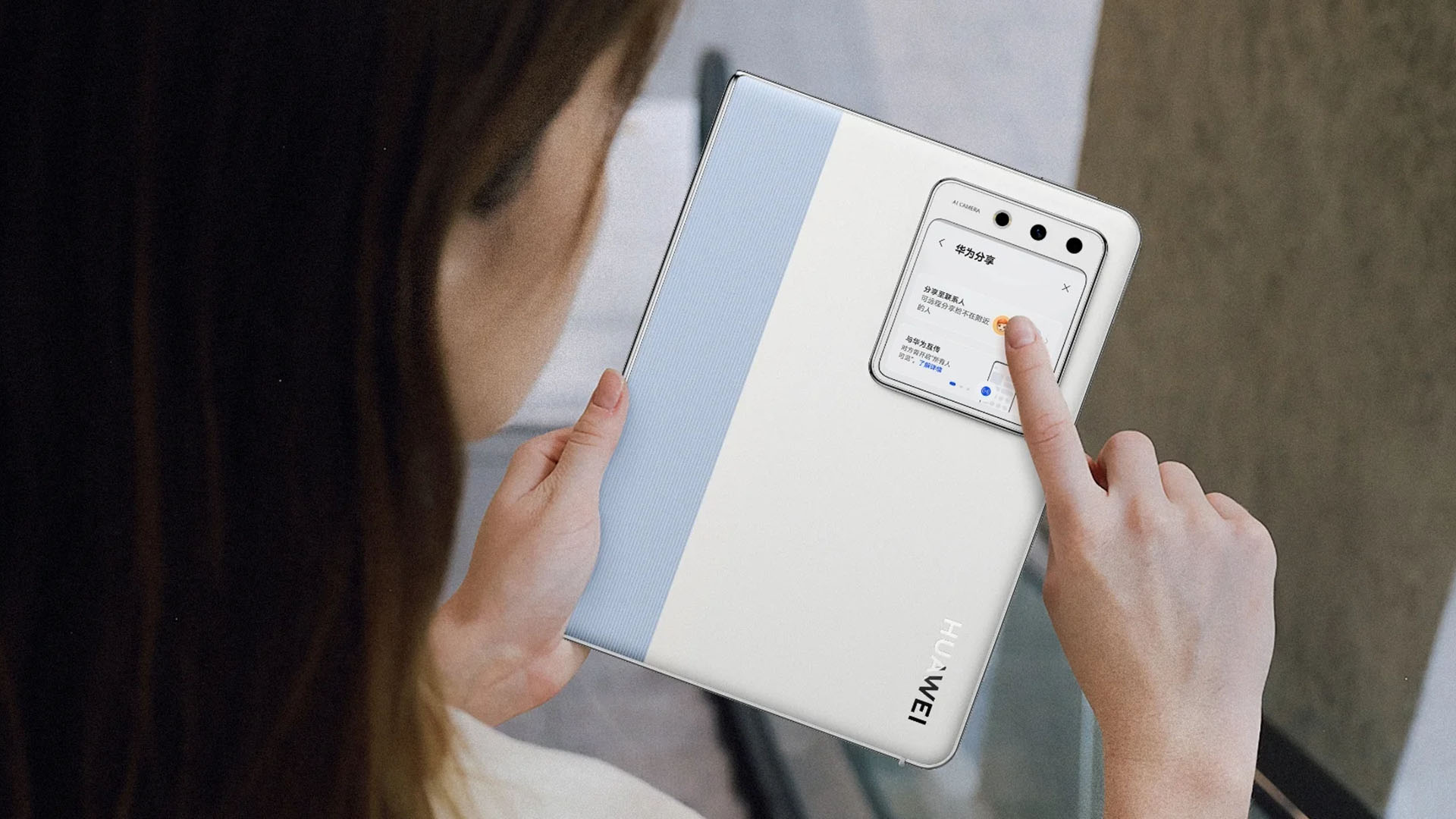
But, the showstopper of the MateBook Fold S has got to be that teeny-tiny outer screen on its back.
It’s a 3.5-inch 1:1 OLED display that’s capable of displaying not just custom avatars. It serves as a handy-dandy notepad when needed with its M-Pencil compatibility (which also works on the inner display).
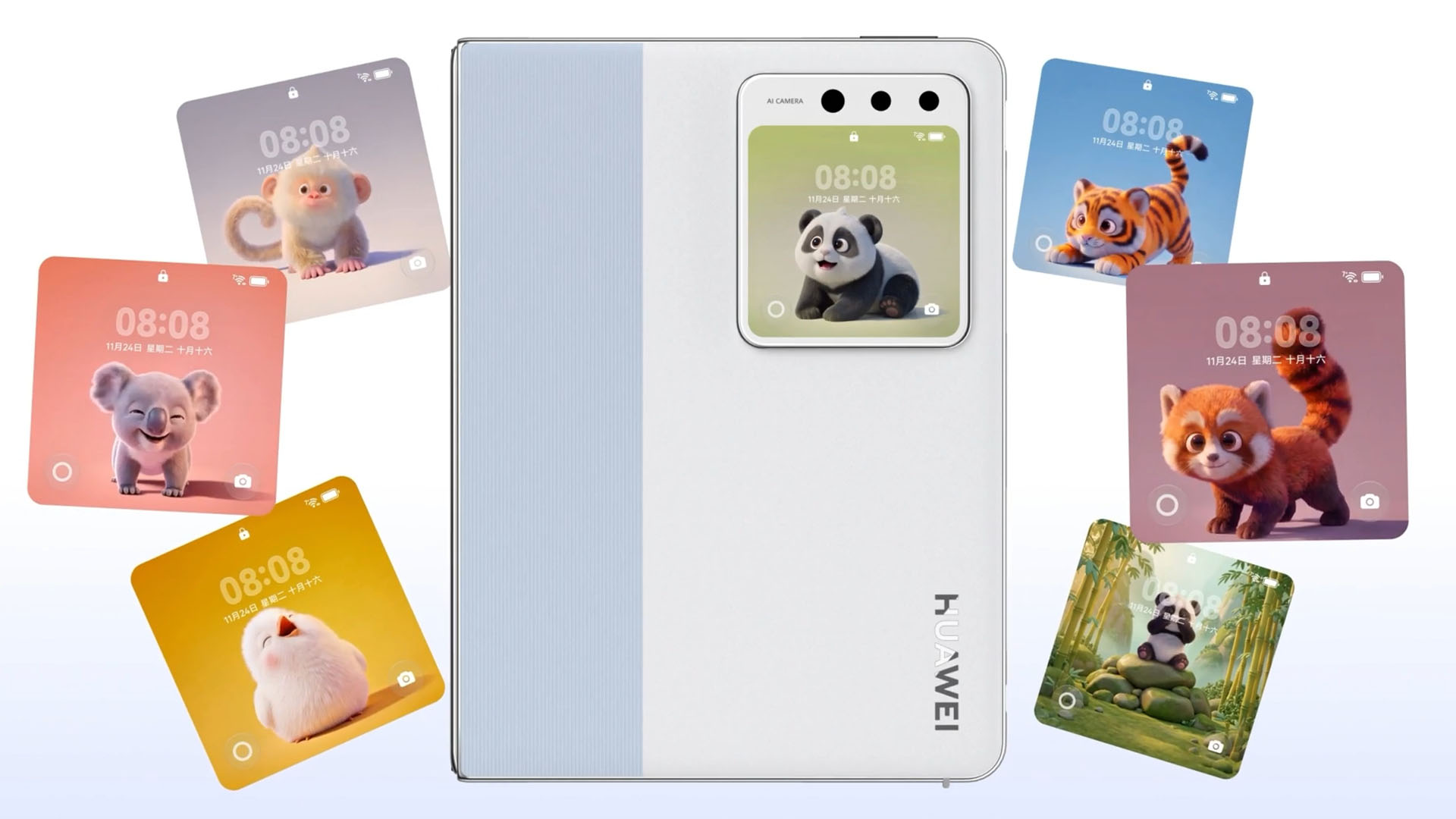
It can also be helpful in opening apps or viewing and sharing files — all without ever opening the foldable tablet slash laptop hybrid itself.
There’s even a 50MP RedMaple camera on it either for answering urgent calls or taking photos like a tablet’s rear camera when the device is unfolded.
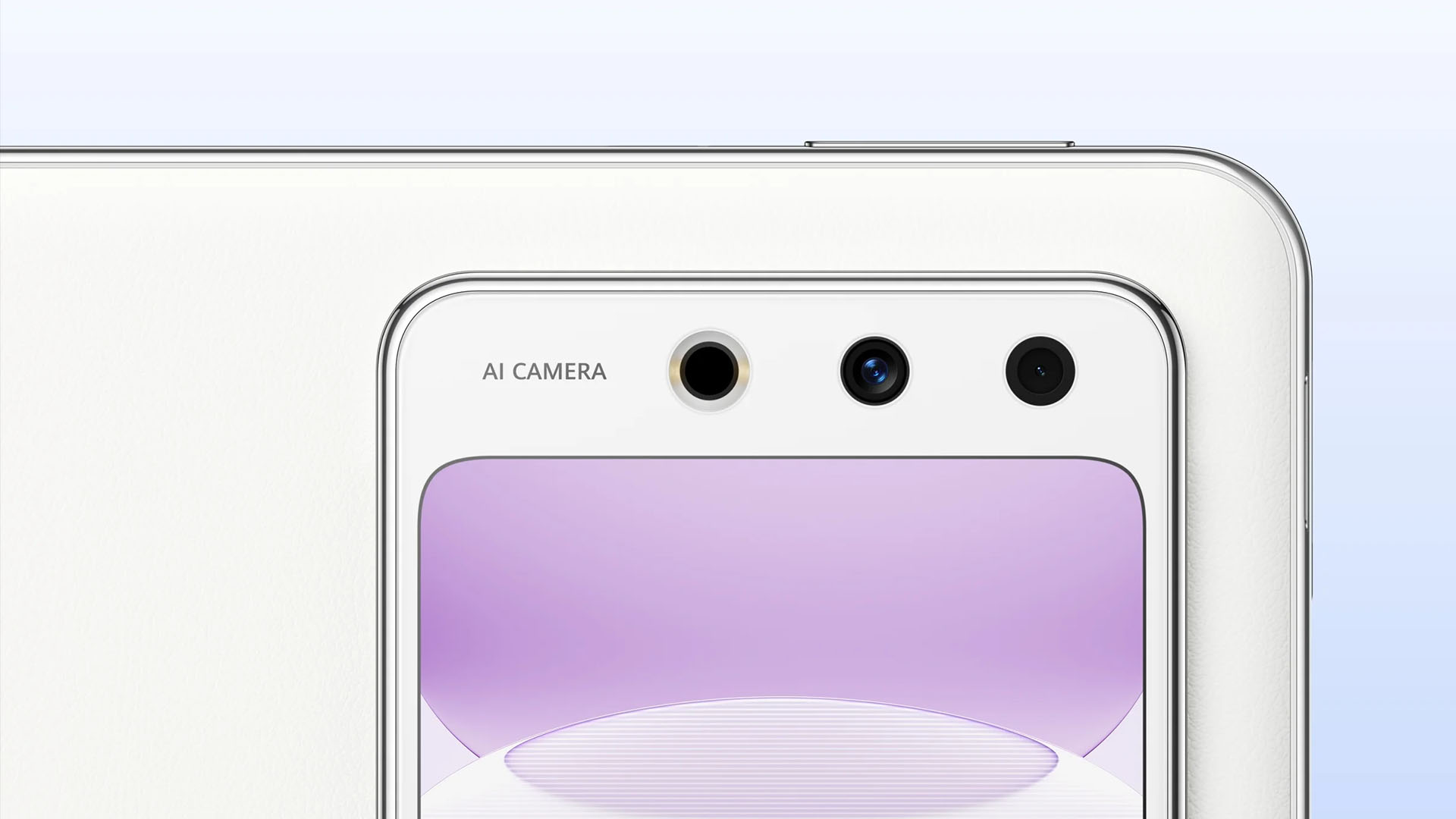
Unfortunately though, that screen is stationary and cannot be detached despite being shaped that way.
Stacked and power-packed
The MateBook Fold S is built with durability in mind. That flexible display is composed of UTG (ultra-thin glass) with a three-layer composite structure. Paired with HUAWEI’s Cloud Falcon architecture and Tiangong hinges, the MateBook Fold S is as durable as it can get.
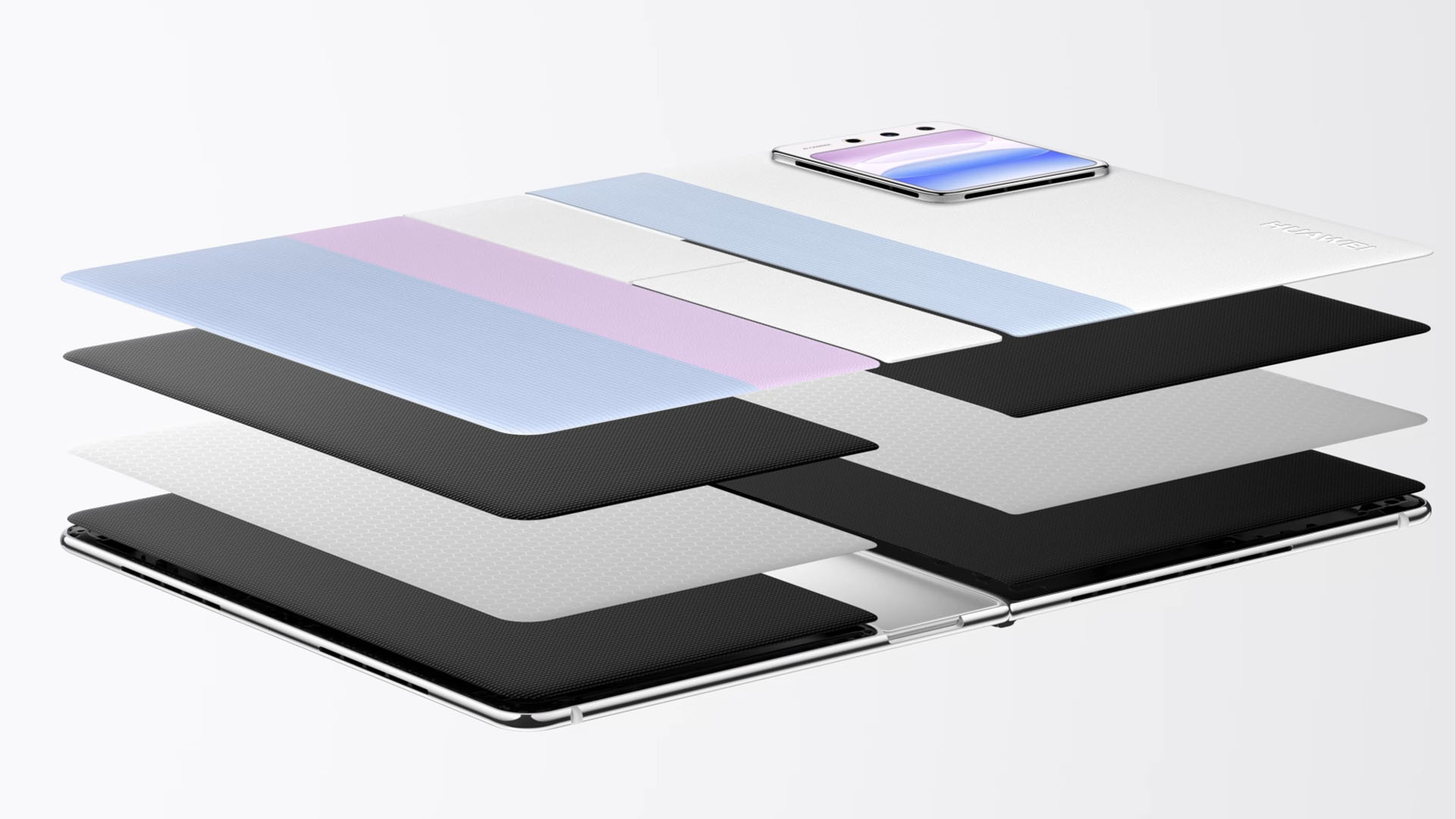
This meant aviation-grade and lightweight composite materials. As well as laser-printed titanium alloy spindle alongside a one-piece carbon fiber door panels for that silky smooth folding and unfolding.
Speaking of, it’s very slim at just 6.49mm when unfolded, or 12.89mm when closed. It’s lightweight too at only 639 grams.
Poweting the MateBook Fold S is HUAWEI’s very own Kirin X90E chip.
This new core promises 23% boost in single-core performance, 25% energy efficiency improvement, and a 40% upgrade in NPU. Together with Ark engine, decompressing a 2GB file or calculating 200,000 rows of data on WPS only takes three seconds to accomplish.
For heat dissipation, it has a 360-degree annular shunt Vapor Chamber with dual evaporation channels. And now that we’re here, it also features four antennas that further strengthens its internet speeds — especially with its Wi-Fi 7 support.
Living in Harmony
As expected, the MateBook Fold S runs HUAWEI’s proprietary HarmonyOS 7 instead of Windows 11.
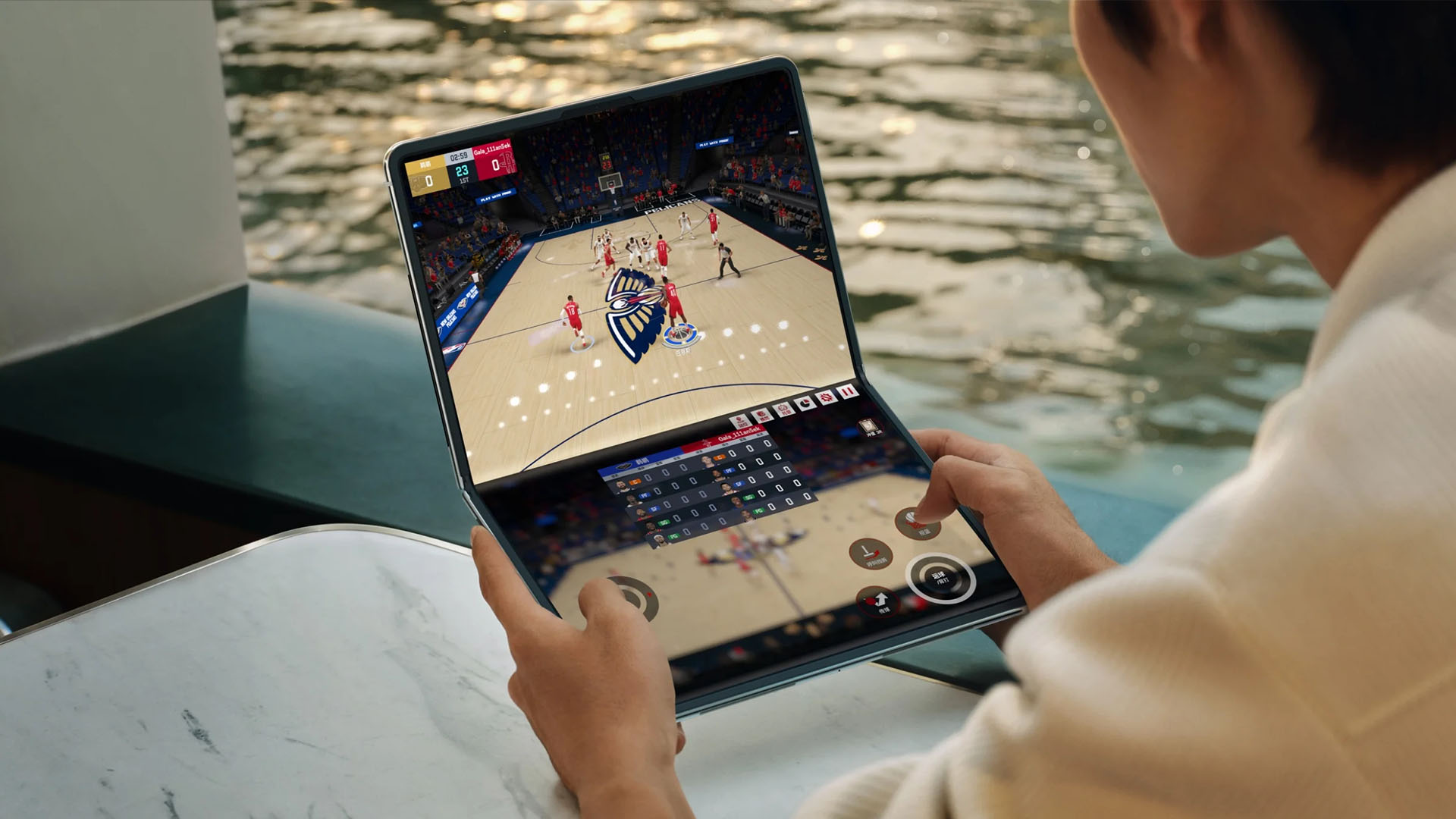
This means that users from the mainland will get to enjoy this foldable tablet (or laptop) with plethora of China-only apps compatible with HUAWEI’s existing OS such as Zhongwang CAD, Qianwen Office, Qoder, WorkBuddy, Kugou Music, and even NBA Summit Showdown.
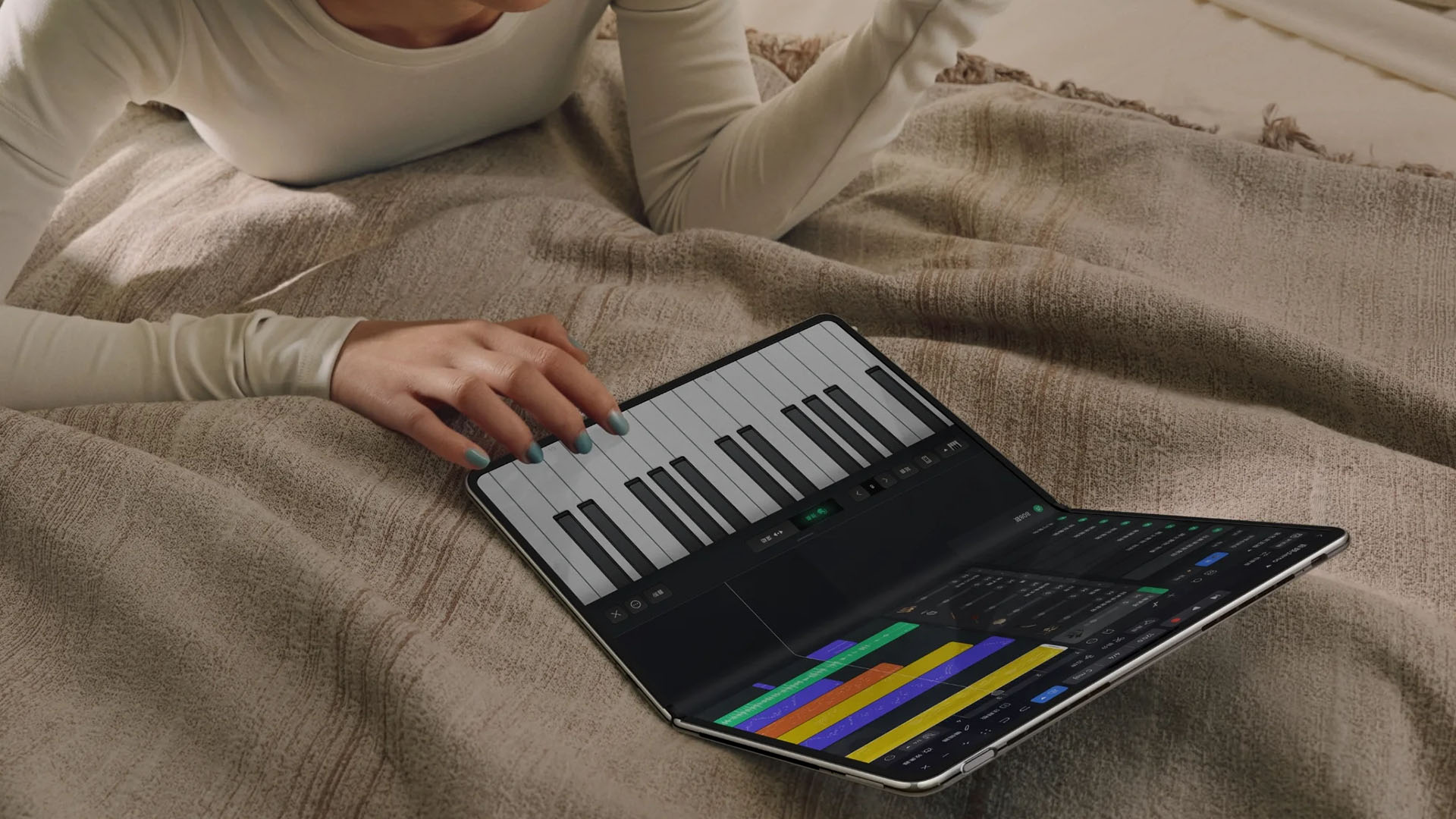
HUAWEI’s built-in Yinyuejia app also serves as a complete companion for musicians. Half-folded, you get the control track layers on top while piano keys are at the bottom. Play it however you want it.
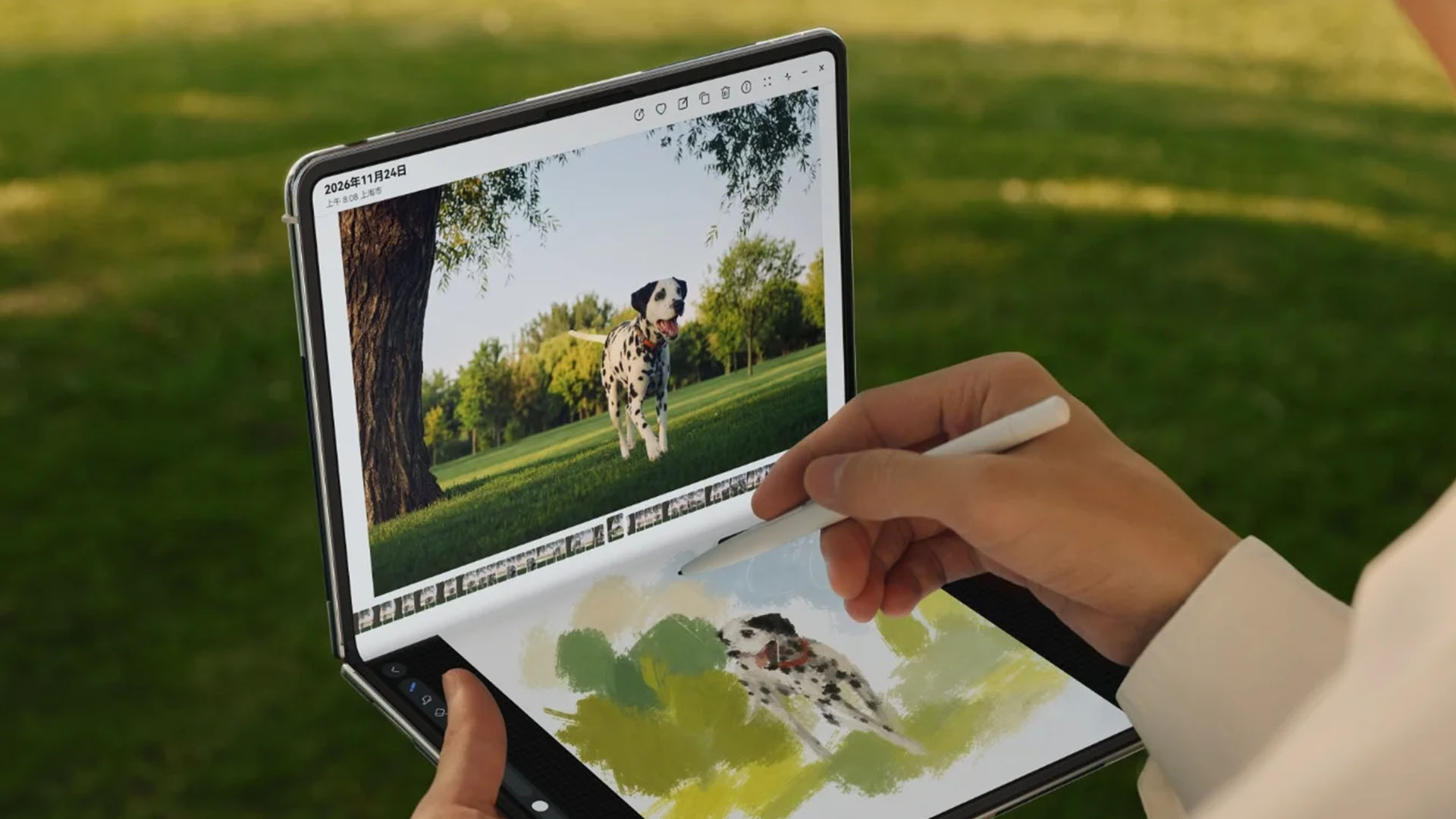
Upgraded with ultra-thin four-wheel drive bass module and equipped with HUAWEI Yuezhang multi-channel near-ear spatial sound field algorithm, the MateBook Fold S is a true multimedia powerhouse.
Lastly, HUAWEI did not forget about the MateBook Fold S’ AI capabilities as it’s powered by their in-house Xiaoyi smart AI assistant.
Pricing and availability
The HUAWEI MateBook Fold S is available in three colorways: Nightfall, Sky White, and Cloud Ocean Blue.
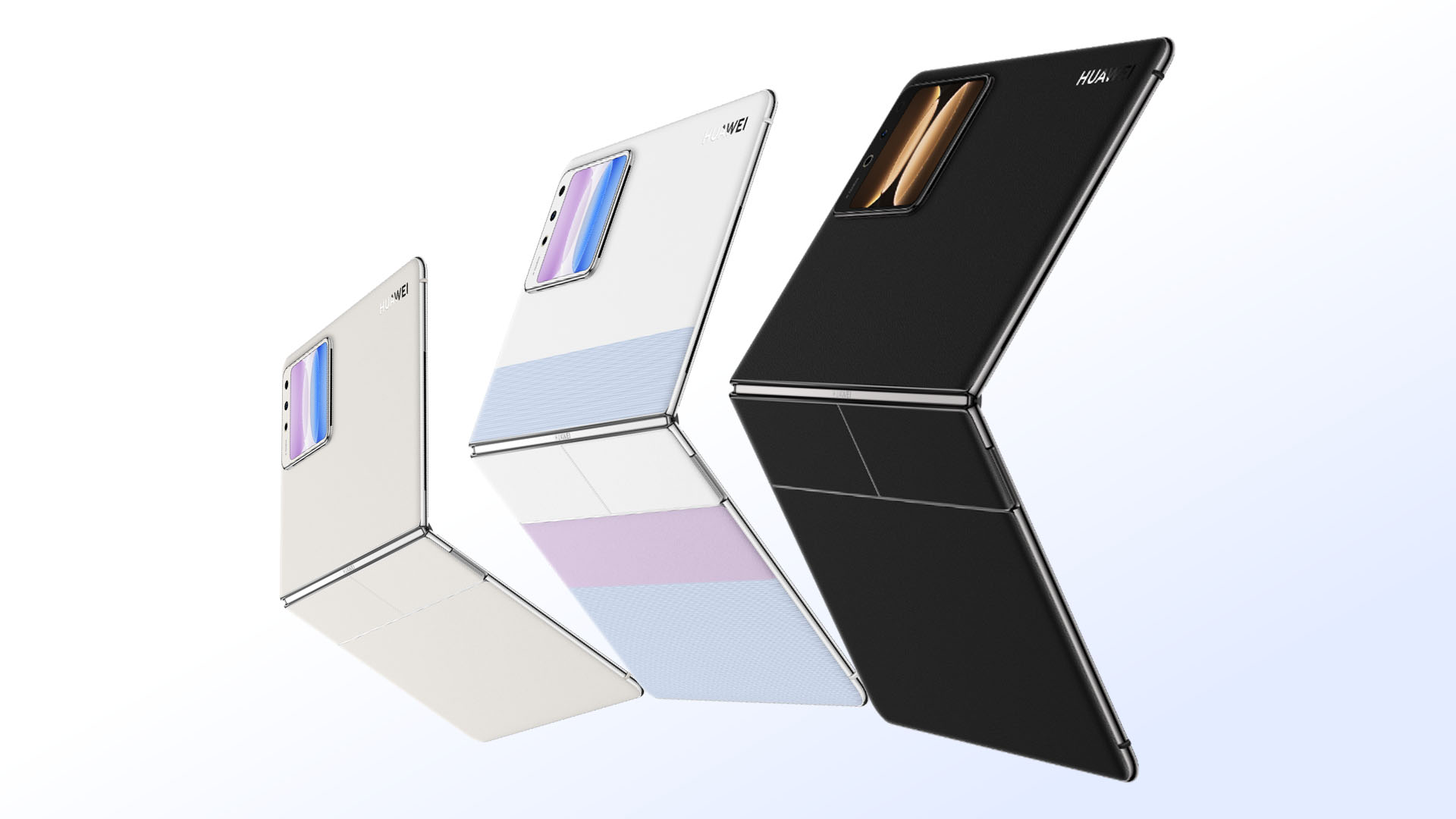
Graphics by Vincenz Lee | GadgetMatch
It’s being sold in China alongside these configurations (and rough pricing conversions):
- 16+256GB = CNY 14,999 (US$ 2235 / EUR 1925 / GBP 1650 / SG$ 2830 / MYR 9045 / PhP 140,000 / INR 211,195)
- 16+512GB = CNY 16,999 (US$ 2535 / EUR 2180 / GBP 1875 / SG$ 3210 / MYR 10,250 / PhP 158,670 / INR 239,355)
- 24+512GB = CNY 18,999 (US$ 2830 / EUR 2435 / GBP 2095 / SG$ 3585 / MYR 11,455 / PhP 177,340 / INR 267,515)
- 32+1TB = CNY 22,999 (US$ 3430 / EUR 2950 / GBP 2535 / SG$ 4340 / MYR 13,870 / PhP 214,680 / INR 323,840)
- 32+1TB Shangxia Limited Edition = CNY 24,999 (US$ 3725 / EUR 3205 / GBP 2755 / SG$ 4720 / MYR 15,075 / PhP 233,345 / INR 352,000)
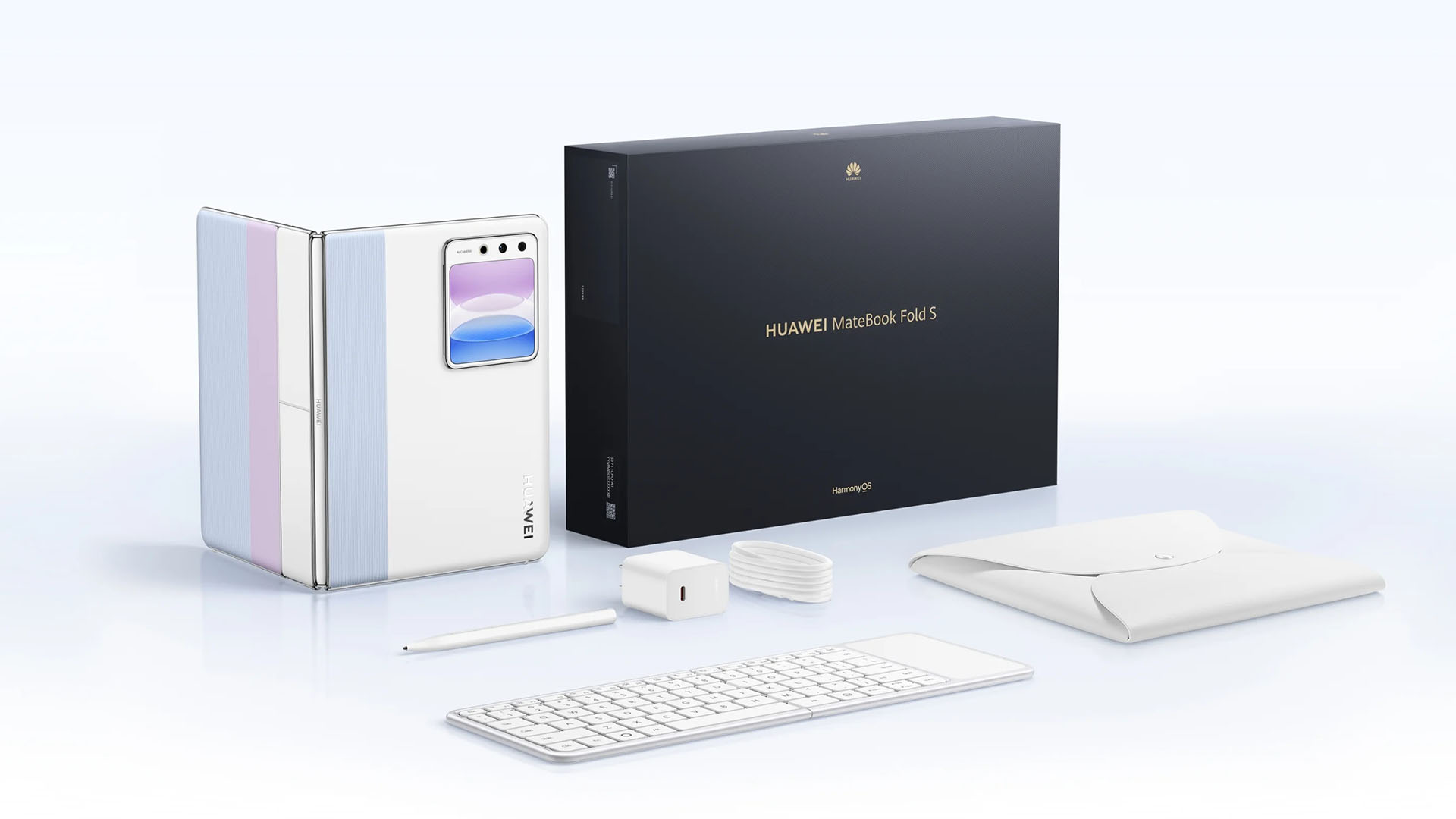
* Shangxia Limited Edition refers to the complete set featuring the StarLeap folding keyboard, storage bag, and M-Pen 3.
HUAWEI even sells this special “Up and Down” bag with a designated cutout for the outer screen itself.
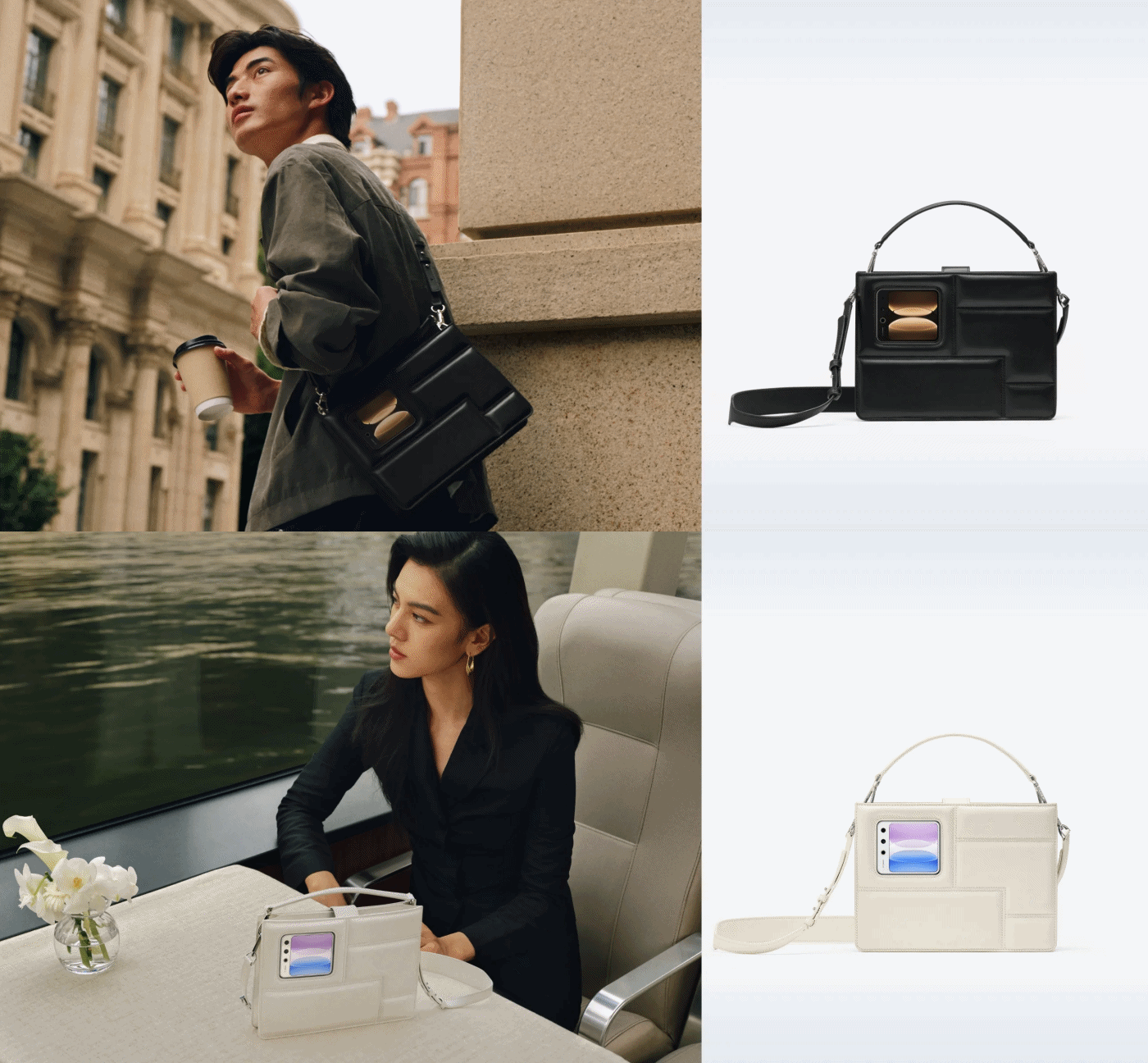
GIF by Vincenz Lee | GadgetMatch
As usual, HUAWEI did not say anything about global availability.
Enterprise
Huawei found guilty of conspiracy to steal trade secrets, bank fraud
The company was not convicted for racketeering, though.

By now, the Huawei saga is a tome thoroughly covered in dust. It’s been a long time since the Chinese company found itself in the headlines for court troubles in the United States. However, even at their smoothest, the legal machine can take time. And so, the company’s saga, which started almost a decade ago, is once again under the limelight after courts finally convicts them for bank fraud and conspiracy to steal trade secrets.
Huawei’s struggles in the United States have been a very prolonged story, involving alleged threats to American cybersecurity and even the arrest of its founder’s daughter, Meng Wanzhou. In the end, everything led to the country banning Huawei from doing business on American soil, hence depriving the brand’s products from accessing Google’s services.
Now, American courts have found Huawei guilty of charges stemming all the way back from 2019 (via AP News). The company was convicted of 10 out of 12 charges, including bank fraud and conspiracy to steal trade secrets.
Likely to the company’s relief, Huawei was spared from the more serious charge of racketeering, an allegation often reserved for organized criminal activity, which would have painted the company as a criminal organization. The other acquittal is the conspiracy to obstruct justice.
Huawei is currently planning to appeal the convictions. If the company isn’t successful beforehand, the United States will proceed with sentencing next September. Though it’s certainly too early to tell, the company might face penalties amounting to billions of dollars.
Enterprise
NVIDIA votes unanimously to reinstate Jensen Huang as CEO
But the investigations will continue.
The ongoing NVIDIA saga is still underway. However, the company will brave those seas with Jensen Huang back at the helm.
Almost two weeks ago, Huang resigned from his post as CEO of the company he co-founded back in 1993. The shocking move was in response to several extramarital affairs that the co-founder was involved in. One of which allegedly involved an agent of Chinese intelligence. Since that news dropped, the company started investigations into Huang’s behaviour. Huang, however, went ahead and resigned.
Today, NVIDIA has announced that its board of directors has voted unanimously to reinstate Huang as the company’s president and CEO. The announcement cites his continued ability to lead as a reason for the reinstatement.
Despite Huang’s return, NVIDIA says that the investigation into the allegations will continue. Huang also says that he intends to fully cooperate with the authorities towards the conclusion of the investigations.
Huang will take over the reins from Colette Kress, current CFO who acted as NVIDIA’s interim CEO during the two weeks of Huang’s absence. Kress will return to her full-time duties as CFO. Meanwhile, Harvey C. Jones, who earned his new spot after Huang’s brief departure, will remain chair of the board.


Now Playing: The Legend of Zelda: Ocarina of Time (2026)
It's a true labor of love.

My latest fashion accessory happens to play music
The JBL Soundgear Clips are the finishing touch my outfits needed!


Fujifilm instax Pal 2 review
A tiny digital camera that’s all about the keepsakes.

Xiaomi 18 Pro Series: Price, availability in the Philippines

Samsung explores creative workflows with Galaxy Tab S12 Series

HUAWEI WATCH Air debuts as the world’s slimmest smartwatch

HUAWEI’s new foldable laptop comes with a tiny screen on its back

A week on Hon Tre Island where my face was the only ticket I needed

Your coffee nook is getting a makeover with Starbucks’ holiday collections

Sticker season is back, and so is the planner your ~friends~ might fill in for you

Wild Rift Patch 7.3, celebrates K/DA comeback

ROG G700 review: The best prebuilt PC you can get off the shelf

vivo X500 Pro Max review: 500+ hours later


-
 Reviews1 week ago
vivo X500 Pro Max review: 500+ hours later
-

 Gaming1 week ago
Five new (and better) games you can play instead of GTA VI
-
Cameras5 days ago
Fujifilm instax Pal 2 review
-
 Accessories2 weeks ago
Secretlab brings Pikachu, Gengar, and Eevee to its Pokémon gaming chair collection
-

 Smartphones1 week ago
Spotlight: OPPO Find X10 Pro Max
-

 Entertainment3 days ago
Spider-Man: Brand New Day returns to cinemas with new scenes
-
 Smartphones1 week ago
The iPhone Duo is replacing my Kindle
-
 Tablets2 weeks ago
Infinix XPAD 30 launches, comes with AI features and expansive display