
Apps
Peloton tips and tricks: How to make the most out of your workout
There’s more to riding your bike than meets the eye

Fitness is about developing routines and forming habits, so don’t get stuck using just a portion of your bike’s potential! If you’re new to Peloton and are looking to getting the most out of your bike, or already on your 100th ride, we’re sure you’ll find something useful in this list of tips and tricks.
To get us started we interviewed Peloton Instructor Irene Scholz to find out what her top tips are for getting the most out of your bike.
Peloton is more than just a bike

Yoga, sleep, strength training — Peloton has it all. Add in another form of exercise when your legs get tired or you can’t bring yourself to get on the bike. Think about forming a holistic workout plan based on the hundreds of classes Peloton has to offer. If that sounds overwhelming, just try out something new: dance cardio or some chair stretching or learn to use that foam roller you bought at a garage sale 5 years ago. You’ve got so much more at your fingertips than just a spin class. Explore it!
Do an FTP Test Every Month
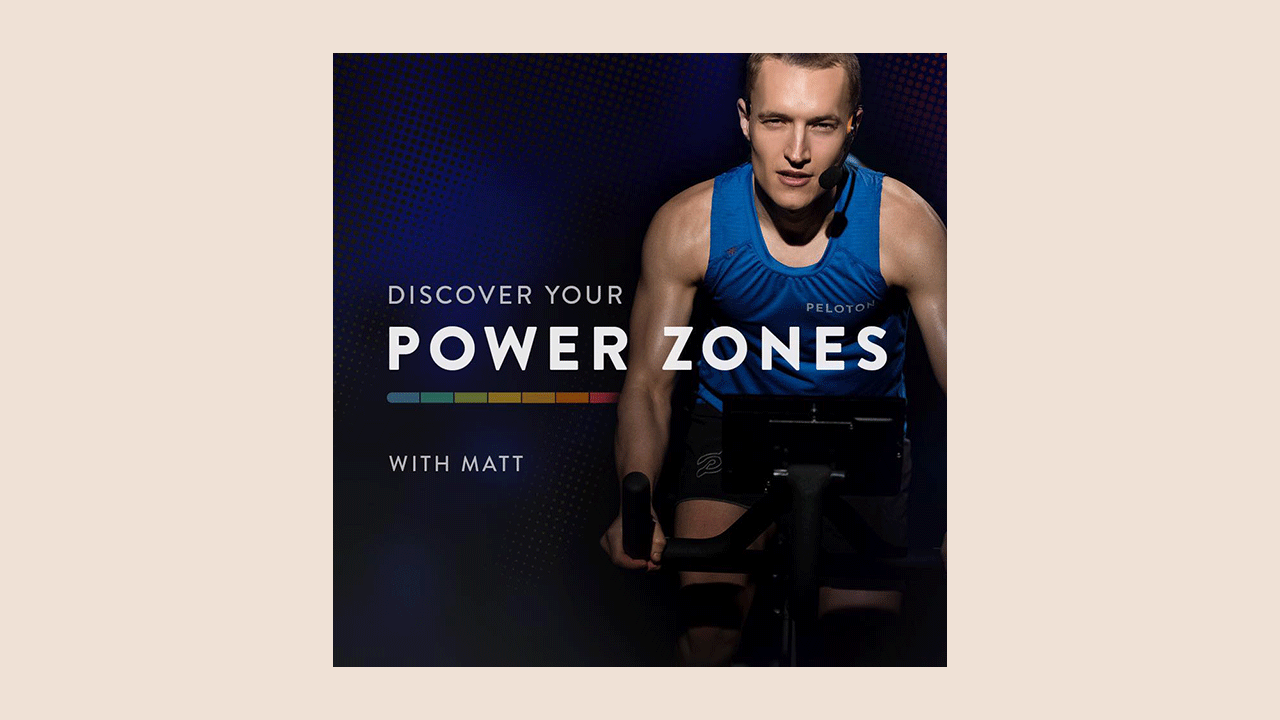
FTP stands for “Functional Threshold Power” and is typically described as the output one could sustain for around one hour. The goal of the 20 min FTP Test is to record your highest average power for 20 min. It’s important to warm up, and warm up in the same way when you take the test again. You should take the test once a month to track your progress.
The added bonus is that it updates your FTP stats so when you’re taking a class you know what zone you’re aiming to train in.
Stretch. Every. Single. Time.
Stretching if the most important part of the workout. You become more prone to injury and tighter on your next ride if you don’t.
Check your set up, even if you’ve been riding your bike a while

Follow the intro videos about setting the seat height and depth, and know that one of the most common setup errors that go unnoticed is that people don’t have the seat high enough.
Here is a video of our favorite German Instructor, showing us how properly set up your bike, in English of course.
Change instructors

As you get in better shape your preferences will change over time, someone that you might not have liked when you first started could be your new favorite.
Do a beginner class
Even 50 rides later, I went back and learned a few things about form I had overlooked.
Check your form every time the instructor tells you to
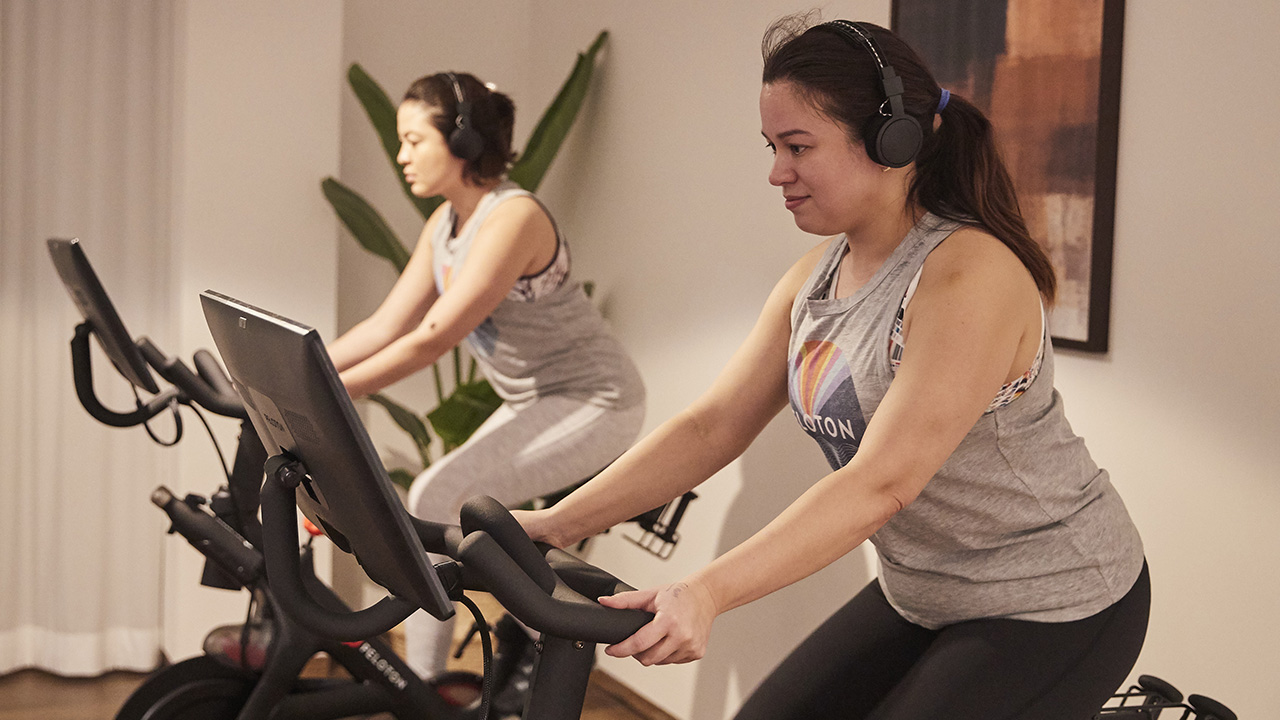
After coming back from my wrist injury I consciously corrected my form every time they told me to, and it feels amazing each time I actually had to make adjustments.
You’ll find that some instructors do things to check their form, but don’t tell you to check yours. Whenever I see Denis lift and wiggle his fingers and lift his wrists, I do it, too. No instructor will have perfect form, but they’ll all do things unconsciously to check in on themselves.
Stop your knee from turning the resistance knob
This means you’re too far forward. Hitting the red knob whether you’re in or out of the saddle means you’re sinking into your joints, and you end up putting weight into your thighs or arms instead of engaging your core. The solution? Push your hips and booty back so your weight is right over the saddle.
Just like real life, there is no pause button

Accept it, there is no way to pause classes. Stop looking. If you drop your water bottle or the doorbell rings, you can’t pause the ride. People have been asking for it since the bike launched but Peloton wants to keep the rides honest. If you take a break you’ll be fresh.
Schedule a workout with a friend

Similar to a live class, Sessions is another way to work out together with other members. On the Peloton app, you can schedule any ride or run that’s 20-minutes or longer, then send an invite to your friends so they can join you in that class. Think of it like an Encore class, which is a class that is not live, but the people in the ride are all starting it at the same time.
If you’re like me who is not very organized, you’ll also see all the latest rides or rides people have selected that are available starting every five minutes at the top of the classes page.
If you’re competitive and using the leaderboard to push yourself, these rides are perfect to have real people to compete against.
Skip the intro
Peloton finally added a feature to skip the 1min opening dialogue! You’ll find the button on the top left hand corner of your screen at the start of the timeline.
Are you pulling up on the pedals?
Pushing down on the pedals happens naturally. Focus on lifting the opposite foot so you engage your hamstring and glute muscles. It will also increase your output. If you’re going after a personal best, you’ll get more out of your stroke if you’re using your quads on the front of your leg and your hamstring and glutes on the back.
Watch your grip

How tight are you holding onto those handlebars? They’re there for stability, not support. Relying on them to support your weight takes away the core and quad work you’re after. Flutter or flex your fingers during the hard parts to check in on form throughout the class. We do it a lot during sprints out of the saddle.
Double tap the screen
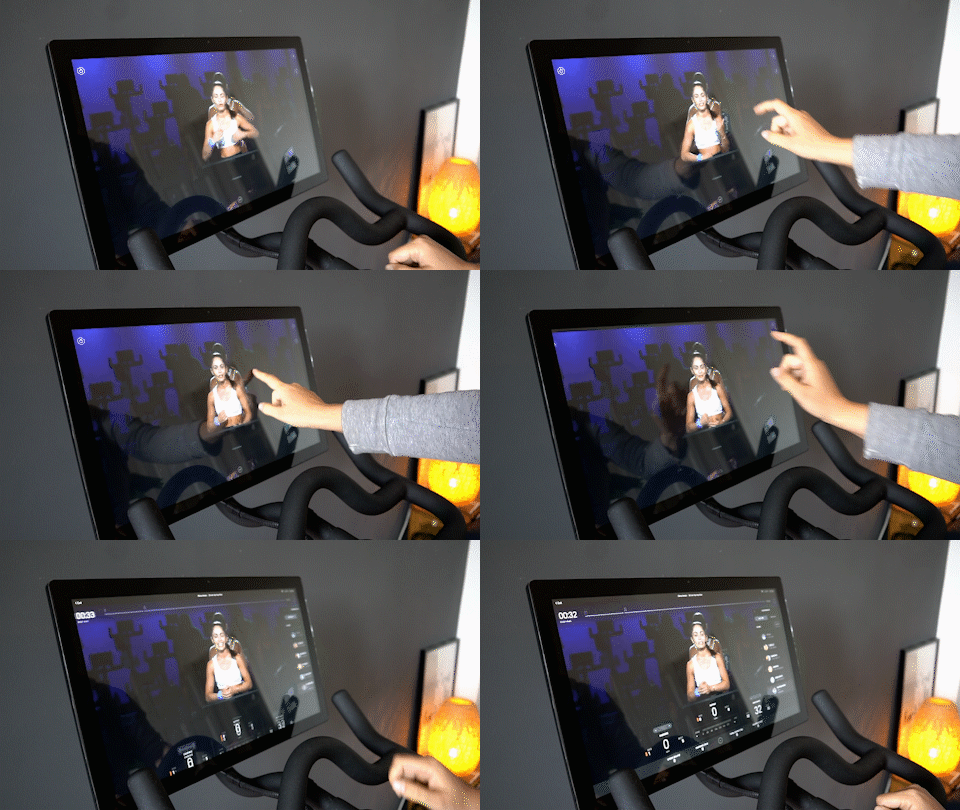
If you want to get rid of the progress indicators, leaderboard, music and high fives, double tap the screen. If you do it again, it will bring everything back. I find this useful when I throw my towel down and I hide something I want to see. Rather than trying to tap a specific button, I just double tap the screen a few times.
Listen to the songs you liked even after the ride
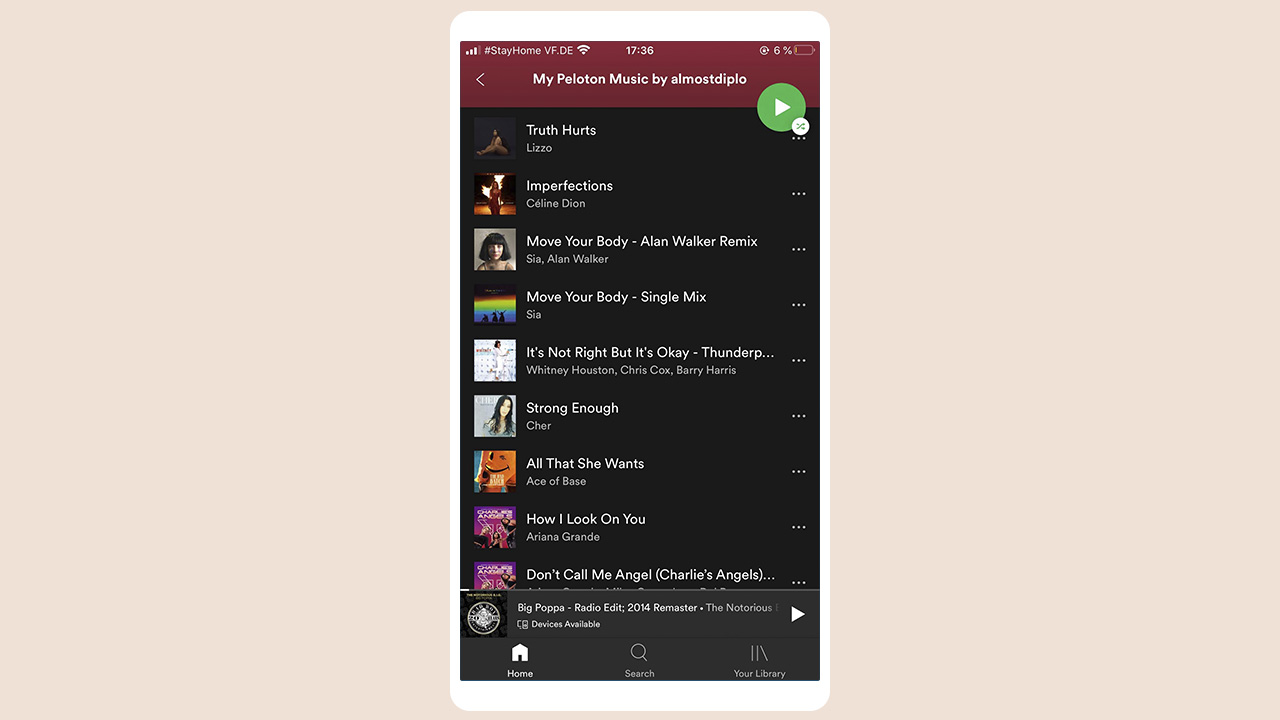
Ever wondered what happens to all the songs you liked during a ride? If you connect your Spotify or Apple Music accounts, every song will be added to your playlist! When you do, you’ll see a playlist called My Peloton Music by (username).
How to connect Peloton Music to your Spotify account
Go to your profile on the Peloton Bike and select “Music” on the left navigation column. This page will show a list of all songs you have saved during your workouts.
From the “Music” tab, click the “Connect” button on the top right of the page to link to your Spotify or Apple Music account. Enter your Spotify or Apple Music username and password, and agree to the terms to proceed.
In your Spotify player, open “Your Library” to view your playlists. A new playlist titled “My Peloton Music” should appear in your playlists. If it does not appear, simply refresh the Spotify player by closing and reopening the app or you might need to scroll down through your playlists to find it.
Lower the instructors voice

If you have classes where you loved the sound track, save them and then choose to have more music and less instructor. It’s amazing how much having motivational music blasting helps. Hit the volume button on the right hand side of the display and on the touch screen change the mix. Note that you have to do it each time as it always resets back to an even mix of music and voice.
READ MORE: 5 best workout apps to try at home
Try more short classes
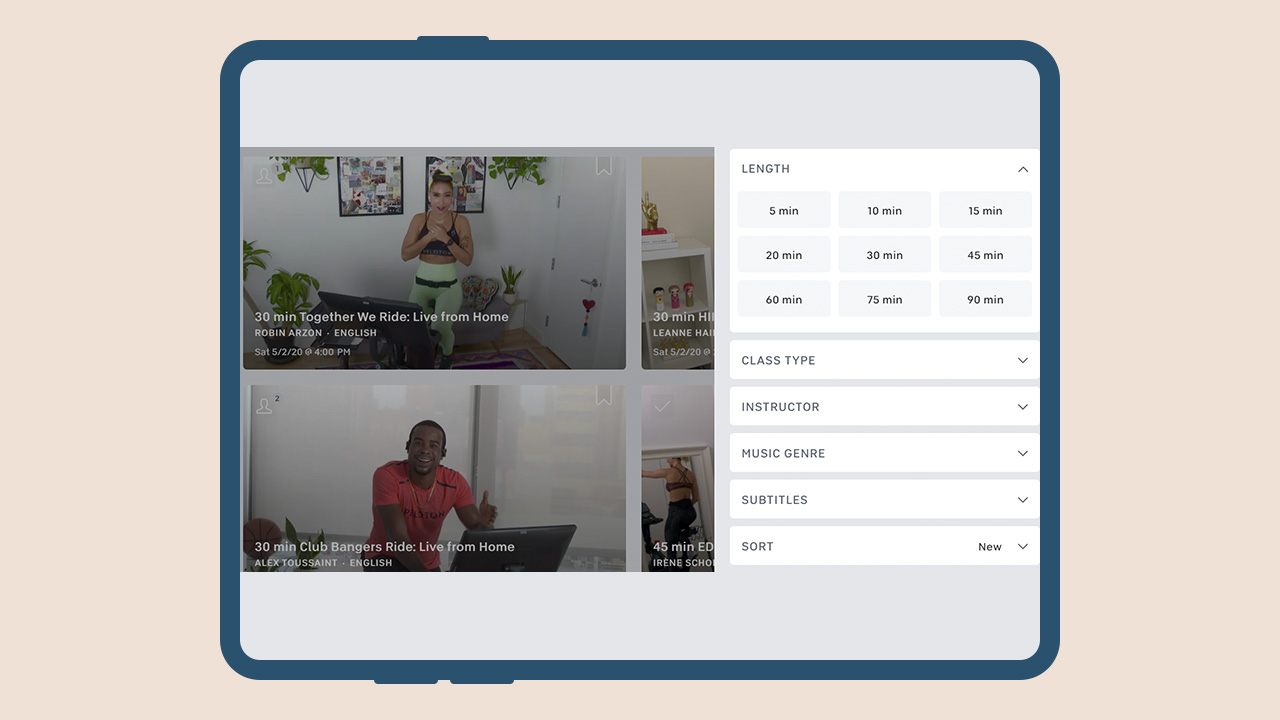
Opting for multiple short classes in a day instead of long ones will also lead to getting your milestones earlier. Once you reach a milestone stage — 50, 100, or any other rounded up number, opt for a live ride. You might just get that shoutout!
The bike gets a lot of attention but the app is a treasure trove

Beyond spinning, you’d be pumped to discover all the other classes available in the app. There are yoga, pilates, and barre classes. There are strength-training classes and boot camps. There are even five-minute cardio classes for the whole fam. I also love that there are meditation classes so I didn’t have to continue my subscription on another app.
Pro Tip: Save time by bookmarking your favorite classes in the app on your phone so you can easily find them on the bike tablet later.
How to get a shout out
Take an early class – If you’re taking a live class in Europe before the US wakes up, there will be less people in the class. That way, your chances of getting a shoutout increase and to grab the top spot on the leaderboard.
Take a live class. This may be obvious to most but if you’re new to Peloton it may be unclear. The instructor can only give you a shoutout if you are on with them in real-time.
Have an easy to read leaderboard name. If your name is long, has a lot of numbers or no capitalization, it can be hard for an instructor to spit it out while leading a class. If you’re willing to alter your Pelo-identity, try to use real words or phonetic spellings so it is easy to read and to say. And yes, you can change your name without losing all your stats.
Join class early. Live classes usually start 3 or 4 minutes prior to the recorded session and “when the lights go down.” During this time instructors casually chat with the people in studio. They also scroll through the leaderboard to see who is on and give quick shout outs. It might not quite be the same as getting it during that final hill but it is nice to know they see you and it can give your entire workout a boost.
Ride on your birthday. Make sure your birthday is set in your profile.
Toe clips are great! For your friends…
I made the mistake of getting toe clips instead of shoes. I made this choice not because I was being cheap, but because I wanted to share the joy of Peloton.

The problem with using toe clips instead of real shoes is that you can’t pull up when you’re bringing your foot around. I’m not a cyclist so I didn’t think that these things mattered. After a few months I decided to get the shoes and it made a huge difference! If you want to increase your output and workout your whole leg, you need the shoes.
I’ve gotten good at clipping and unclipping the toe clips. The first time it took 30 minutes, now it takes just 30 seconds! I still suggest buying them if you have friends sharing your bike they’re worth every penny.
Make clipping out a little easier

What I learned about installing the toe clips is that you have to loosen one of the screws. I also noticed that if I forgot to tighten it, it was really easy to unclip. It takes practice to snap your foot out in a single graceful movement. Cheat a little, loosen the screw. The disadvantage to doing this is that when I’m standing and have my full weight pushing and pulling on pedals I hear a creak. You need to twist your ankle out at a 90 degree angle out from the bike. I’m never in danger of my foot unclipping, but it sounds like I need to tighten things up a bit, which I do.
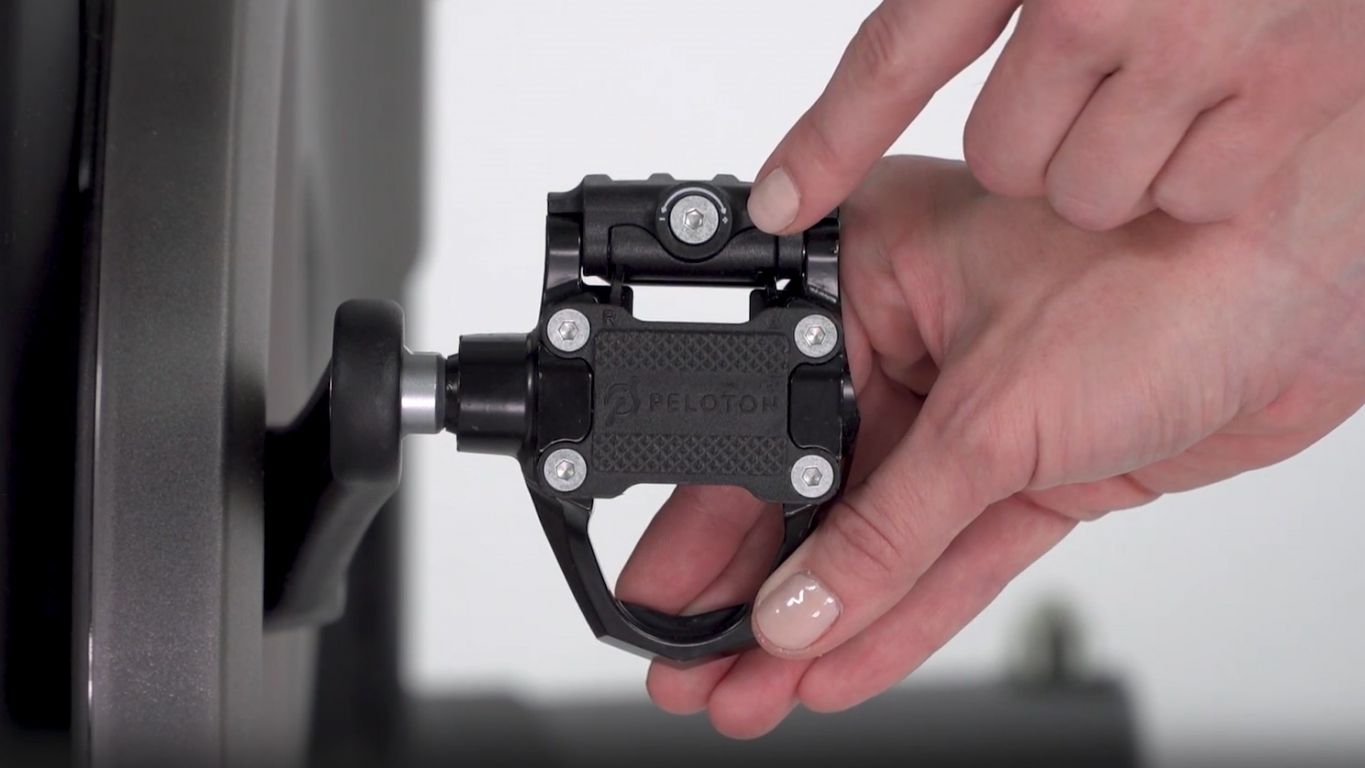
Don’t loosen your pedal too much as you’ll risk damaging it.
Understand the types of rides
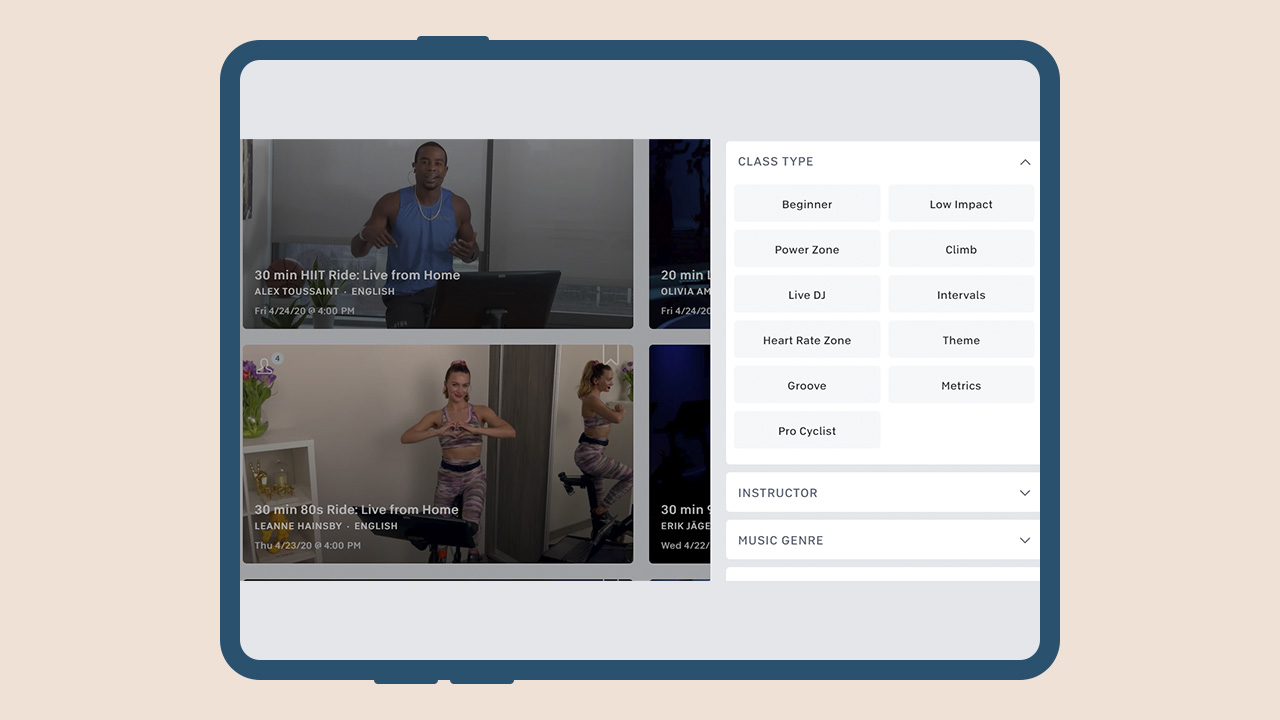
If you’re new to Peloton, some of the terminology and slang used will probably be confusing. Here are some basic ride types to get you started:
Low-Impact. This doesn’t mean low effort, but in general it means that the cadence won’t go over 100, the resistance won’t go over 50, and there will be little or no “out of the saddle” sections (i.e. standing).
Groove. This type means less cadence dictated by the instructor and more based on riding to the beat of the music. It can also sometimes include more movement on the bike. When people ask, “what ride is more like Soul Cycle?” this is one of the frequent answers.
Live DJ. This means exactly what it says: a live DJ is in studio mixing songs and helping to drive the class. These are fun when the DJ and the instructor have a good rapport.
HIIT. High intensity interval training or HIIT is a series of intense periods followed by a quick rest period. PRO TIP: avoid doing this as your first ride.
Tabata. This is a type of HIIT ride, but it follows a specific pattern. The classic Tabata pattern is 20 seconds of effort followed by a 10 second rest. I think “Tabata” translated means sweaty; or death.
70’s / 80’s / Y2K / Classic Rock / EDM. These are rides based on the associated genre of music, and it’s not limited to these. There’s country, jazz, broadway, etc.
Power Zone. Based on your calculated Functional Threshold Power, these rides direct you through seven different zones of output from “Very Easy” to “Max Effort.”
Call a Friend
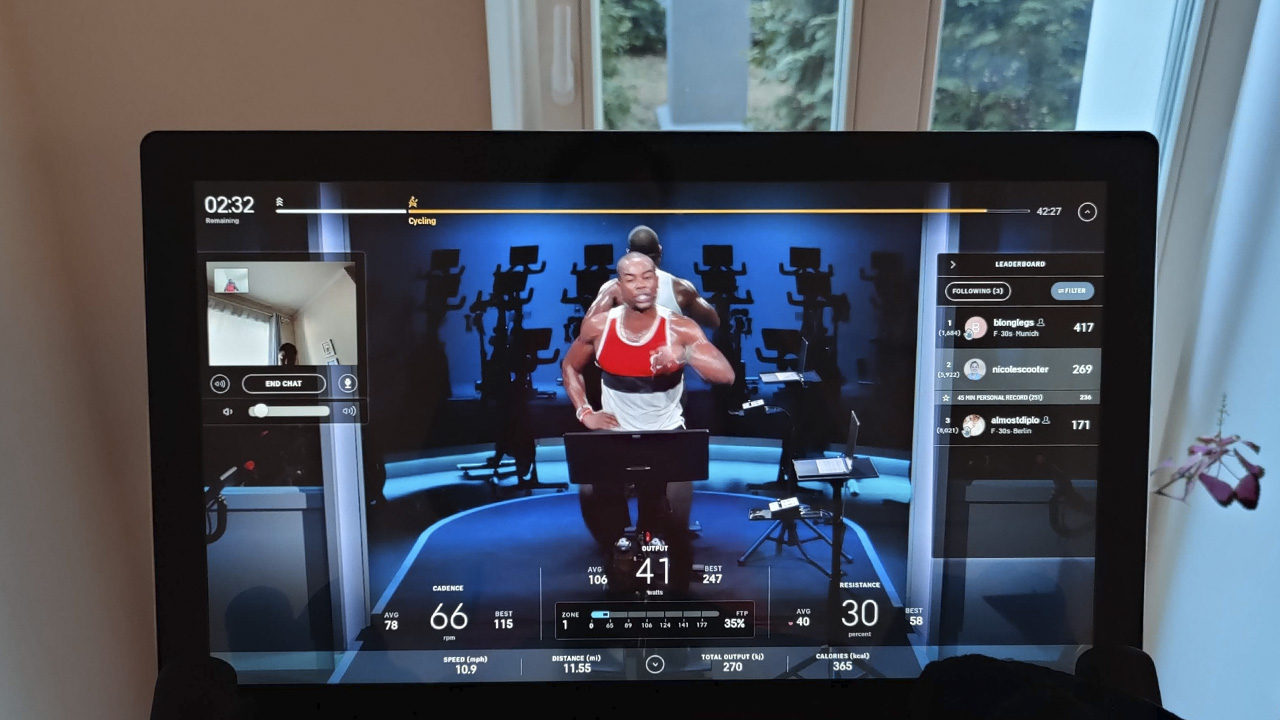
If you’re wondering what the 5MP camera on the bike is for, during a live ride you can do a call with a friend. But first, you have to be friends on Peloton. In your profile settings, go to social, then enable video chat.
During a live ride, invite friend to ride at the same time. Click on their name on the leaderboard and an option to call them will appear. This will activate the camera located on the top part of your screen. A small window showing their video feed will appear on the instructor’s right. Now, you can see each other as you ride, talk (if you can) in between each pedal stroke, and enjoy milestones together — virtually, of course.
Fair warning: make sure to only use this feature with good friends because that angle is not flattering. There are only so many people that I would let watch me die during one of Irène Scholz’s rides.
Did we miss any tips or tricks? Let us know in the comments!
— with additional tips from Carol RH Malasig
If you’re keen to try reading this in German, visit Mobile Geeks!
This article was originally published on May 4th, 2020. It has since been updated to reflect Peloton updates.


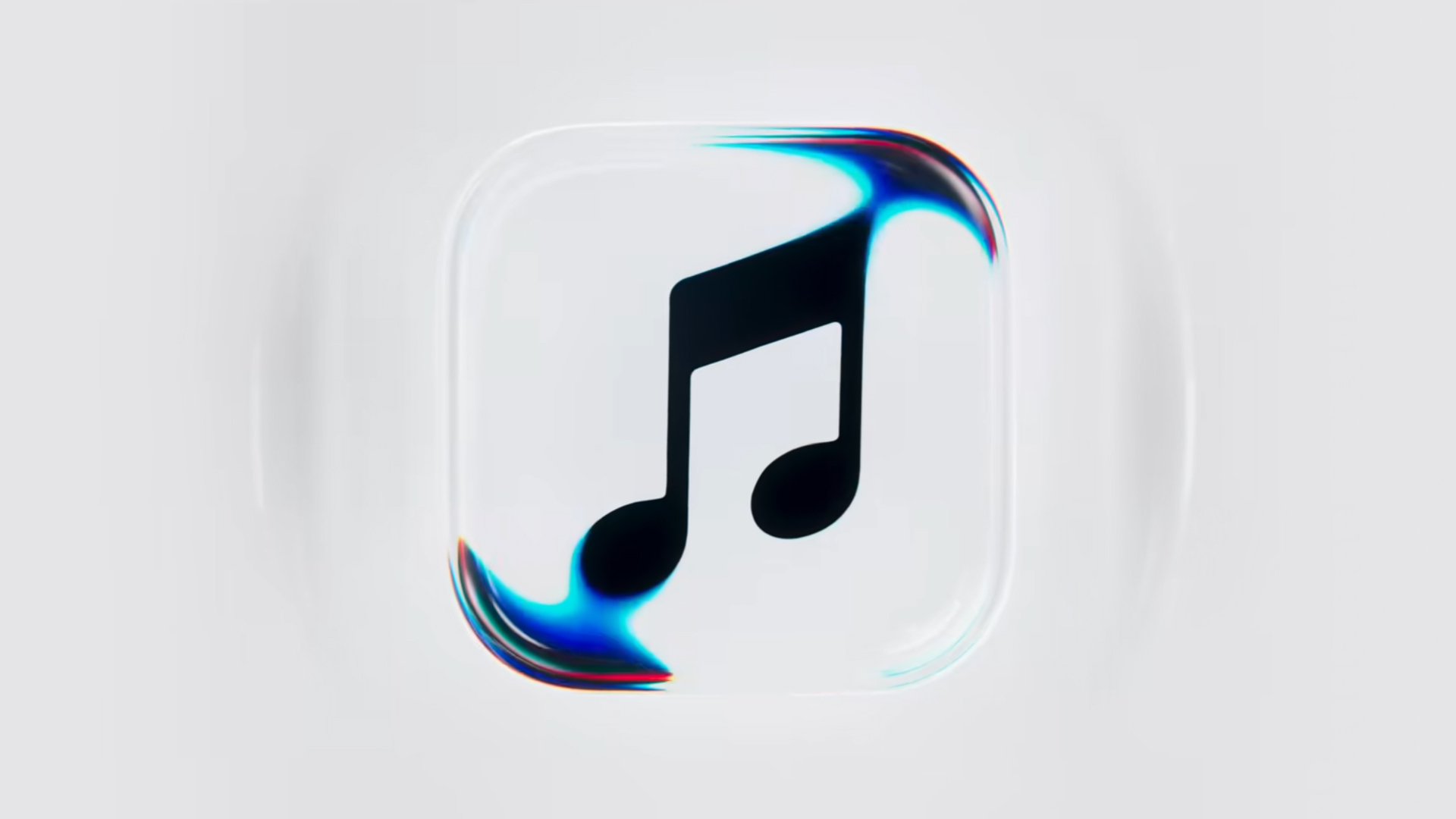
Apple Music is getting a revamp. In one of the tamer things going on with the brand today, Apple has introduced a new design language for its native music streaming platform.
In the midst of all the hubbub surrounding the iPhone Duo, Apple released a change in the visual identity of Apple Music. Rather than a static logo, the platform’s newest evolution offers a dynamic look that melds Liquid Glass and the power of sound together.
Confirmed through a behind-the-scenes video, Apple says that the new aesthetic was made with practical effects. Music producer Fred Again and NEST Acoustics submerged the platform’s logo in a tank of mineral oil and creating ripples with sound. The new language matches well with the chrome aesthetic typical of today’s trends and… well, Liquid Glass, of course.
Apple says that the more ripple-filled version will play before longer content like concert recordings (similar to Netflix’s startup stinger). Meanwhile, a black-and-white version will replace the app’s icon currently colored red and white. Current previews show off a simple logo, but it’s unknown whether Apple is adding a but more elements when the final version drops.
The updated version will debut for users after next week’s iOS 27.2 and macOS 27.2 updates.
SEE ALSO: Apple iPhone Duo Unboxing and Hands-on
Apps
Disney+ strengthens footing as go-to sports streaming app with UFC, NBA, more
ESPN on Disney+ brands itself as ‘new home ground for sports’


Disney+ is strengthening its footing as a go-to sports streaming app as ESPN on Disney+ is now available in the Philippines, one of its markets with a huge sports-loving fanbase.
The launch coincides with a brand new campaign, “Ito ang Homecourt Mo!” (This is your homecourt!), welcoming Filipino fans to a new home ground for games, stories, and moments.
Subscribers can access live events, on-demand replays, studio shows, documentaries and original programming together in one dedicated destination through ESPN on Disney+.
Production and coverage will be led by ESPN, delivering high-quality broadcasts, commentary and expert analysis across the sports season where available, alongside Disney+ general entertainment and family programming.
Following last season’s success, NBA returns to ESPN on Disney+ with matchups during NBA Tip-Off Week.
Christmas Day games will also be available to stream, including the NBA Finals rematch between the New York Knicks and San Antonio Spurs and the Philadelphia 76ers versus the Los Angeles Lakers.
Playoff games through the conference finals shall also be streamed live and on demand.
Meanwhile, the UFC is among some of the new regular sports programs Filipinos can watch on Disney+.
The action kicks off at UFC 333 in Abu Dhabi scheduled on October 25, where two world championship titles are expected to be on the line: UFC featherweight champion Alexander Volkanovski takes on undefeated No. 1-ranked contender Movsar Evloev, and UFC bantamweight champion Petr Yan defends against former champion and No. 1-ranked Merab Dvalishvili.
Alongside live UFC numbered events and UFC Fight Nights, fans will have access to a library of classic fights and curated UFC content.
There will also be the original and and behind-the-scenes programming, including UFC Countdown, UFC Connected, UFC Main Event, UFC Fight Flashback, UFC Reloaded, and ROAD TO UFC.
A new home ground for sports
Other notable sports programming will include the Formula E 2026/27 season, with practice, qualifying and main races across 21 rounds in 13 host cities.
Also available on Disney+ are NCAA events, including March Madness, and Australia’s National Basketball League (NBL), with all games live across the regular season and championship series.
ESPN’s popular 30 for 30 documentaries will continue to be available on the platform. The line-up also features ESPN studio shows, including ESPN FC and Pardon the Interruption.
Apps
GrabCar Group Ride now splits the fare automatically
Passengers stand to save up to 50% compared with booking a solo ride
GrabCar Group Ride now splits the fare automatically among passengers, making it simpler to book such ride types.
Each rider can save up to 50% on fare as well when using a group ride, compared with booking a solo ride.
The ride type lets the ride host and up to two friends share one GrabCar, with up to three drop-off points along the way. The more people join, the more affordable the ride becomes for everyone.
Regular ride buddies can also be saved as a group, together with frequent pickup and drop-off pins. This way, repeat bookings take just a few taps.
Such a system is ideal for officemates headed the same way or friends coming home from a night out, as well as plenty of other scenarios.
To book a Group Ride, follow these steps:
- Open the Grab app, tap GrabCar, then select Group Ride
- Enter your pickup point and drop-off
- Share the invite link with up to two friends
- Your friends can add their own drop-off points
- Confirm the booking to split the fare automatically
The GrabCar Group Ride feature is now available in all GrabCar cities nationwide.

HP OMEN Max 16 review: Gamer-maxxing in deep black
Peripherals deemed necessary to max this out

vivo V80 review: Good phone, tough sell
A capable travel companion


Ghost of Yōtei Complete Edition review: More of a great thing
Picking up where Atsu left off

Visa: 79% of Filipinos want to learn about stablecoins

CASETiFY Match: Finding the right case for your Galaxy Z8 Series phone
HP OMEN Max 16 review: Gamer-maxxing in deep black

Google illegally destroys 250,000 trees for a single AI data center

FINAL FANTASY RESONANCE now available across major platforms

TECNO CAMON Slim 5G review: Slim on size, big on surprise

TECNO CAMON Slim 5G: Price, availability in the Philippines

HONOR Magic9 Pro Max launches in China with ARRI-powered imaging

BYD says that way better EV batteries are coming next year

HONOR 600S review


-

 Gaming2 weeks ago
Dragon’s Dogma 2: Dark Arisen launches with new Official Pawns
-

 News1 week ago
vivo V80 debuts with ZEISS cameras
-
 Deals2 weeks ago
Score PhP 22,000 in guaranteed freebies when you pre-order the iPhone 18 Pro at Beyond the Box
-
 Philippines1 week ago
TECNO CAMON Slim 5G gets launch discounts, free MagBadge
-
 News1 week ago
Samsung: Galaxy Z Fold8 demand rose because of iPhone Duo
-
 Features1 week ago
I don’t want a phone that unfolds — the Galaxy Z Fold8 gets why
-
Reviews6 days ago
vivo V80 review: Good phone, tough sell
-

 News4 days ago
OPPO Find X10 Series: Price, availability in the Philippines